
Google Ranking Facoters
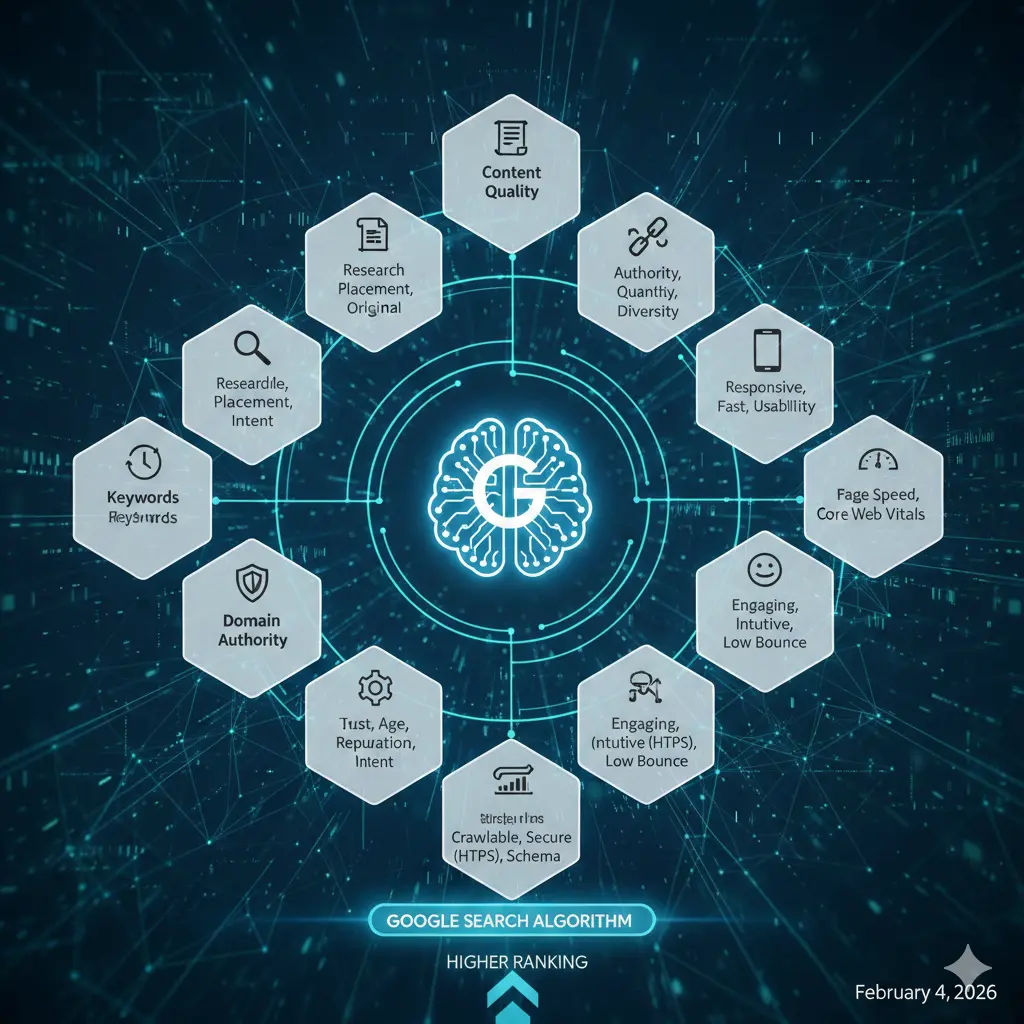
1. The Core Ranking Factors for 2026
To rank a blog post today, you must satisfy three distinct layers of Google’s algorithm: Intent, Experience, and Engagement.
First-Hand Experience (The “E” in E-E-A-T)
The most significant shift in recent years is Google’s ability to detect “Experience.” AI can explain how to do something, but it cannot describe how it felt or the specific hurdles encountered.
Original Data: Include your own charts, surveys, or case studies.
Personal Perspective: Use “I” or “We” to describe actual testing or usage of a product or service.
Unique Assets: Original photography and custom diagrams are now massive ranking signals because AI cannot easily replicate them.
Information Gain Score
Google now calculates an “Information Gain” score. If your blog post says exactly what the top 10 results already say, your chances of outranking them are slim. To win, you must:
Add a new angle or contrarian opinion.
Provide a deeper level of detail that competitors missed.
Offer downloadable tools, templates, or checklists that add utility beyond text.
2. Content Creation Checklist
Mastering Search Intent
In 2026, keywords are just the “flavor,” but Intent is the “meal.” Google categorizes intent into:
Informational: “How to…” (Best for long-form blogs).
Navigational: Looking for a specific brand.
Commercial: “Best [Product] for…” (Requires comparison tables).
Transactional: “Buy [Product]…” (Requires fast-loading product pages).
Formatting for “Skimmability”
Google tracks user engagement metrics like Interaction to Next Paint (INP) and dwell time. If a user hits a wall of text and leaves, your ranking will drop.
Title: Must be a <h1> tag and include the primary keyword near the start.
Headers: Use <h2> and <h3> tags to create a logical hierarchy.
Bullet Points: Use them for lists to keep the reader moving.
3. Visual Content & Technical Health
Image Optimization
Images are no longer optional. Google’s “Multimodal” search (Gemini) reads your images to understand the page.
Alt Text: Describe the image for accessibility and SEO.
Placement: Place images near the text they illustrate.
Format: Use WebP or AVIF for fast loading.
Technical Core Web Vitals
Even the best human writing won’t rank on a slow site. Your blog must pass the CWV 2.0 standards:
LCP (Largest Contentful Paint): Main content must load in under 2.5 seconds.
INP (Interaction to Next Paint): The site must respond instantly to clicks.
CLS (Cumulative Layout Shift): Elements shouldn’t jump around as the page loads.